|
This commentary explores how the readings for the 12th Sunday of Ordinary Time overturn the world’s assumption that justice and mercy are opposites, and shows how the liturgy of the Mass holds them together as a single divine harmony, justice as a flame that purifies and restores, mercy as God’s limitless generosity lifting the fallen.
First Reading (Jeremiah 20:10-13): Jeremiah moves from anguished lament to fervent imprecation, surrounded by mockery yet unable to stay silent because God’s word burns like fire in his bones. He entrusts his cause entirely to God: “LORD of hosts, you test the just, you see mind and heart.”
Second Reading (Romans 5:12-15): Paul contrasts Adam’s transgression with the overflowing gift of grace in Christ, reminding us that sin can neither prevail against nor approach the magnitude of God’s mercy. “Where sin increased, grace overflowed all the more.”
Gospel (Matthew 10:26-33): Jesus reveals justice and mercy as inseparable, entwined like a polyphony. He assures the disciples that God’s justice will expose all hidden things, while his tender care counts every hair of their heads and values them more than many sparrows. Yet this compassion calls for a response: whoever acknowledges Christ before others, He will acknowledge before the Father.
Liturgical Connection: The whole Divine Symphony of the Mass weds justice and mercy. The Penitential Rite calls us to honest self-examination, the Readings and Homily expose and heal, and the Eucharistic sacrifice reveals Christ’s mercy most vividly in his Body and Blood. At the altar, heaven and earth meet, and justice and mercy become living truths that invite transformation.
Key Message: Justice and mercy are not rival principles but one divine harmony. God’s justice purifies while his mercy lifts the fallen, and grace always overflows sin. Like Jeremiah, we are called to proclaim Christ boldly even amid trial, living fearlessly as a liturgical people who honor God’s flawless justice and trust his boundless mercy.
|
|
|
NEW BOOKS AT SAINT DOMINIC'S MEDIA
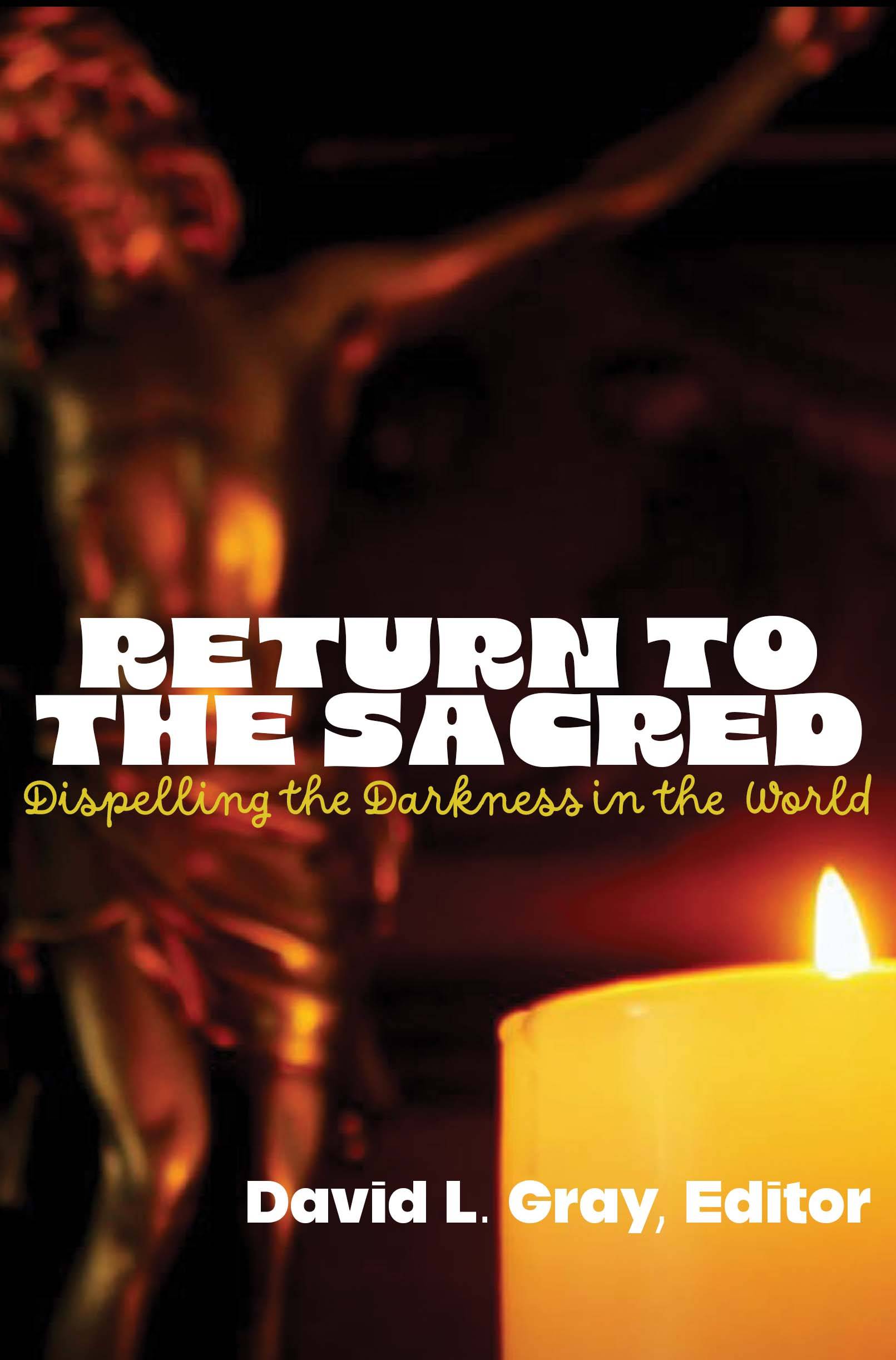
Return to the Sacred: Dispelling the Darkness in the World has a thesis that we have lost too much of what belongs to God — and in losing the sacred, we have begun to lose ourselves.
To which, editor David L. Gray gathers some of the most compelling clerics, thinkers, and evangelists in the Church today and puts to each of them three urgent questions: What sacred things have we lost? How did we lose them? And how can they be recovered?
|
|

Artificial Intelligence Proves Catholicism is True records what happened when David L. Gray asked one of the world’s most advanced AIs to reason, from a blank slate, about God. Step by step, with no faith to defend, it argued its way from the possibility of a necessary being to the one Church that claims unbroken apostolic succession. The argument is not the author’s. It is the machine’s, recorded word for word. The answers that the machine gave, without any bias inserted, are going to change everything.
|
|
|
|
The whole story of how Catholics pray — traced, sourced, and connected.
Saint Dominic’s Encyclopedia of Catholic Liturgies, edited by David L. Gray, is a new kind of reference: a single, carefully sourced map of the whole Catholic liturgical world, traced from the first century to the present day. Most people know the Roman Mass — but the Church’s worship is a vast and living family tree, branching into five great traditions: the Antiochene, Alexandrian, East Syrian, Roman, and Gallican. Each has its own rites, forms, and uses, from the Coptic Liturgy of Saint Gregory and the ancient anaphoras of Antioch to the Dominican Rite and the reformed Roman Mass celebrated around the world today. This encyclopedia follows every branch — where it came from, how it developed, what it teaches, and how it is prayed now.
What sets it apart is that you can trust it and check it. Every entry is built on real scholarship and cites its sources page by page, so you can trace any claim back to where it comes from. Where the experts disagree, we say so plainly instead of papering over the debate — honest about what is known and what remains genuinely disputed. Alongside the entries, you’ll find a growing glossary of key terms and profiles of the people and places who shaped Catholic worship, all linked together so one question naturally leads to the next. It’s being written to serve the curious newcomer and the serious student alike.
|
|
|
Have You Gotten Your Copy Yet?
The Liturgical Sense of the Readings at Mass (Year A):
The Liturgical Sense of the Readings at Mass invites the faithful to engage deeply with the Scriptures, enhancing their understanding of the Eucharist and the rhythm of the Church's liturgical life.
|
|
|
REVIEW: "Was grateful to receive this one in the mail before Advent. An excellent commentary to read to the family. This has become my family's reading for Friday to help us prepare for Sunday Mass. It offers a depth that is helpful to all ages. A great conversation starter for the family dinner table. Bergsma's 'The Word of the Lord' was our Friday reading prior to The Liturgical Sense of The Readings at Mass, but this has become our preferred reflection. Thank you." - JP, Abide The Fire Apostolate
|
|
|
